Ride a bike along colourful fishing villages and piers | Sherry Ott
Blog home / Sizing up your Canadian Adventure
By Robin Esrock
In a country this vast, the slower you go the more you’ll see
The second-largest country on Earth sounds impressive until you realize what it means for those of us with a finite number of vacation days. Canada is not just big. It's cosmically, absurdly, almost offensively huge. We're talking about 9.98 million square kilometers (3.82 million square miles) of mountains, forests, tundra, prairie, coastline, and everything in between.
Consider that The Yukon alone consists of 482,000 square kilometers (186,101 square miles). That's larger than Sweden, and larger than California. You can fit Belgium inside it more than 15 times and still have room for a few national parks. All this space is practically empty and home to fewer than 46,000 people, most of them gathered in the capital of Whitehorse. Now consider this: The Yukon is just one of Canada's three northern territories, and it’s only the ninth largest province or territory in the country. Yes, you can fit almost 3 Yukons in Quebec alone!
When Canadians give directions, we don't talk in kilometres, we often talk in driving time. As in: "Vancouver? That's only 15 hours from Calgary." There are people who will make this drive all the time, sometimes for a weekend trip. In Europe, 15 hours in a car will transport you through 6 or 7 countries. [Side note: my 9-year-old just giggled because I used the numbers 6 and 7. We truly live in a weird time.] In Canada, 15 hours gets you from one major western city to the next, assuming you don’t stop to enjoy views of the Rockies along the way.
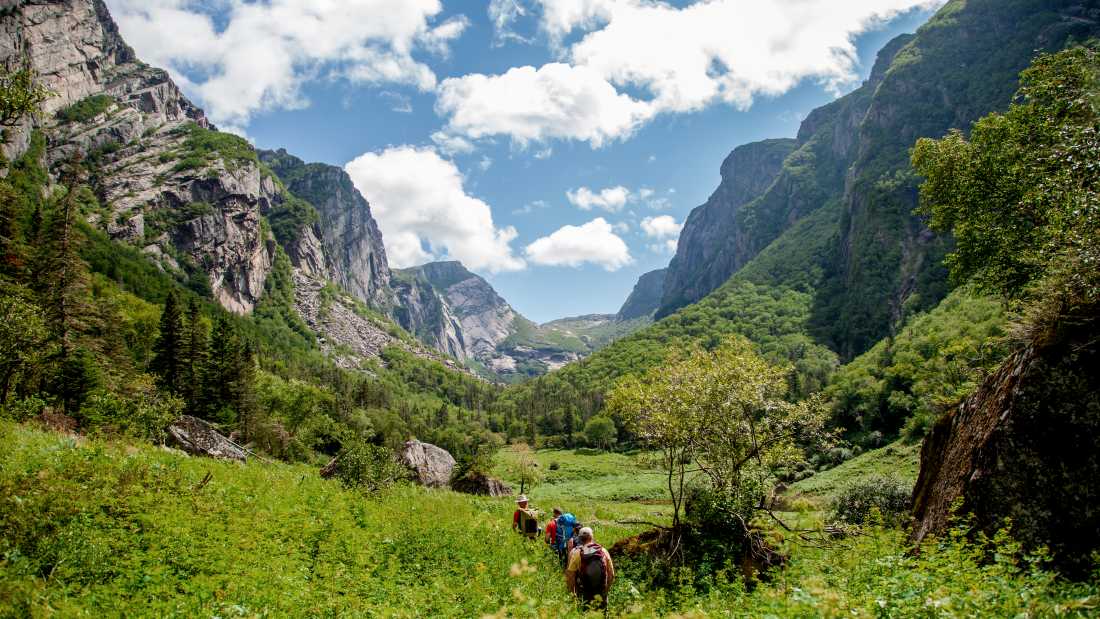
The first time I visited Newfoundland, I had one week to explore St. John’s, rent a car, drive to Twillingate for the icebergs, then continue to Woody Point, Gros Morne National Park, and head south to town of Corner Brook. Driving across the island takes about 7 hours, which is doable, although no fun at all if you plan to actually see or do anything along the way. The fact is that Newfoundland is a province, and Canada is a country, that is best experienced when you take your time. Regardless of whether you’re visiting Alberta or Quebec, Nova Scotia or Newfoundland, you’re not here to speedily deliver parcels for Amazon. Discovering Canada is all about special moments and unforgettable experiences.
It explains why most Canadians, i.e. the people who have lived here their entire lives, have yet to actually see much of their own country. Most Torontonians just never get to Newfoundland, and most Vancouverites have yet to explore the Maritimes. This is the result of being able to travel very far in your own backyard, much of it consisting of remote, stunning wilderness. As for the rest of the country, the overwhelming scale of Canada can intimidate travellers from knowing where to begin.
This is where established itineraries come into their own, and the concept of slow travel transcends its origins as a buzzy tourism catchphrase. When you only have a week to explore a single province that’s the size of France, you’ll find a fork in the road ahead. Either spend that week stressed, exhausted, racing from one attraction to the next behind the windshield of a car. Or pick one small region, slow it down, and actually experience it. Veterans of multi-day hikes and bike rides already know that the best way to do this is on a self-guided or small group outdoor adventure.
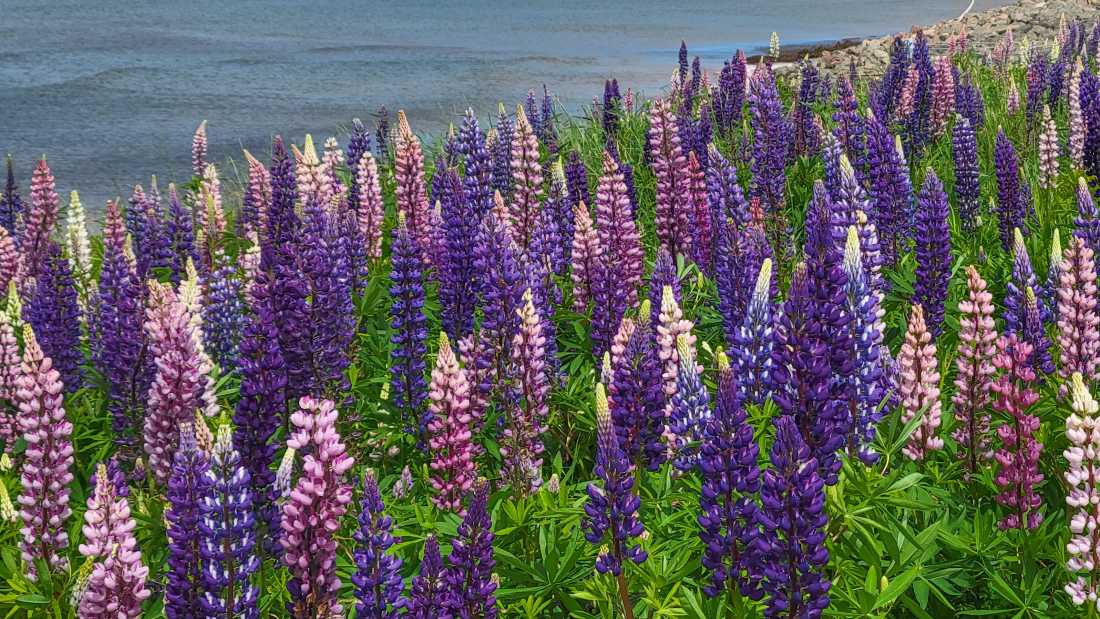
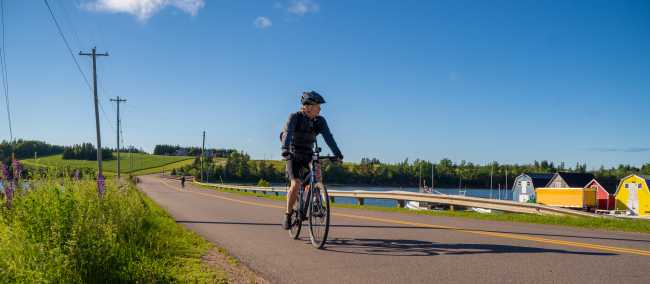
If you want to understand Canadian distances, try cycling them. Moving forward at 20 kilometers (12mi) per hour tends to recalibrate one’s sense of time and scale. While 80 kilometres (50mi) can easily be knocked off before lunch in a car, that same distance becomes an all-day adventure involving rest stops, snacks, sweat, scenery, local encounters, and I’d argue, a profound appreciation for whoever invented padded bike shorts. When you’re driving 80 kilometres an hour, you just can’t stop to smell Prince Edward Island’s purple lupine, or the taste the delicious pie on Quebec’s Blueberry Bicycle Route. One of the great ironies of travel is that the slower you go, the more you get to actually see.
When signing up for a week-long hike or bike ride, give yourself permission to see less and experience more. Yes, there will be plenty of local attractions where you can exit through the gift shop, but that’s not what this is about. Slow travel prioritizes depth over breadth, encouraging you to inhabit a place long enough to understand its rhythms, meet its people, taste its delicacies, and stumble upon the stuff that doesn't make the guidebooks. This is coming from someone who has written nearly a dozen guidebooks.
The best holidays or adventures tend to develop like the best relationships. You have to be an active participant and allow it to build over time, all the while trusting it’s going to work out. I’ve been to Newfoundland four times, and while I can barely remember that first road trip chasing attractions through the blur of windshield, the week I spent on the East Coast Trail with my father was the trip of a lifetime.
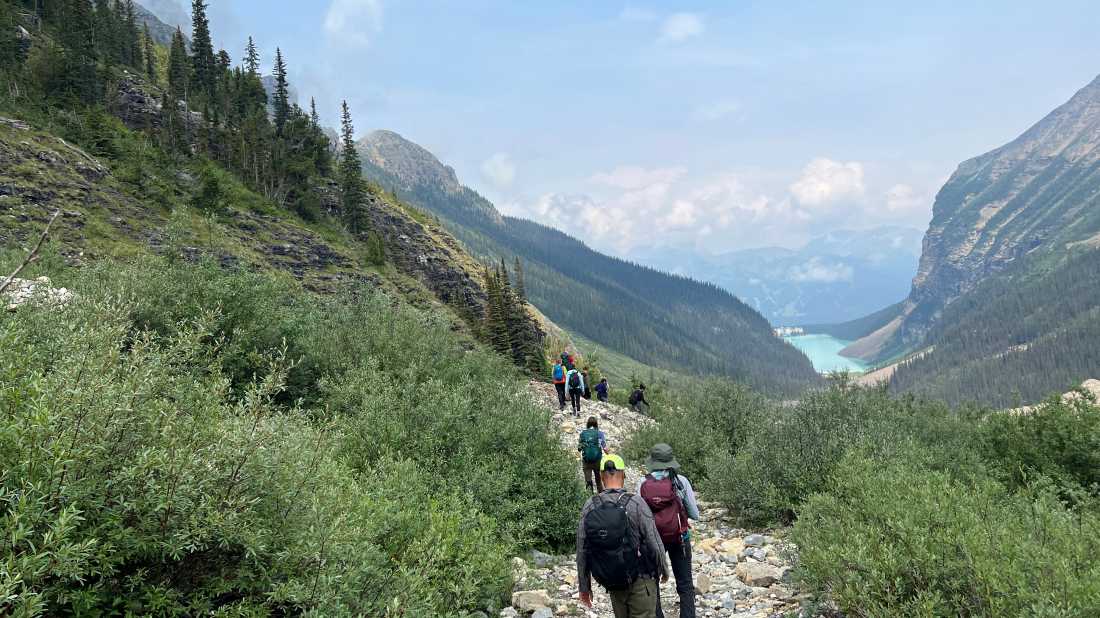
As you consider your Great Canadian Trails adventure, I invite you to pick a region and commit to it completely. If you're coming from far to hike the West Coast Trail, don't try to squeeze in too much in Vancouver or Victoria. And if you're cycling across Prince Edward Island, that's all the time you’ll need for the red cliffs, Anne of Green Gables and those legendary lobster suppers. Hiking in the Rockies, cycling on the Niagara Peninsula, taking on the Parks and Wildlife of the Yukon – don’t worry if you don’t get to see and do everything. Canada’s enormous size isn't a challenge to overcome in a race to do-it-all. It's merely an invitation to return, again and again.
Robin Esrock is the bestselling author of The Great Canadian Bucket List, now in its third edition.