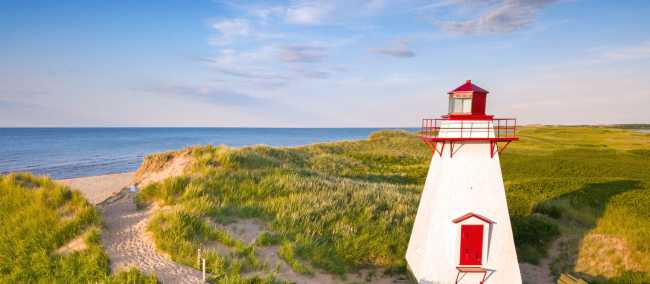
Lighthouse views on Prince Edward Island | Tourism PEI/Sander Meurs
Blog home / The Light at the End of the Trail
By Robin Esrock
Canada's lighthouses continue to stand tall as marvels of marine engineering, symbols of hope, and landmark attractions on both Atlantic and Pacific coasts. Before GPS, lighthouses were essential to safely guide fishing and passenger ships to shore. Some still operate, others have been decommissioned, but all serve as bait for photographers, anchors for road trips, and historical attractions for those exploring a coastal trail. With the largest coastline of any country on the planet, Canada has over 750 lighthouses, each with its own tale of tempests, tragedy, and triumph. Here are a few you might encounter on Great Canadian Trails itineraries.
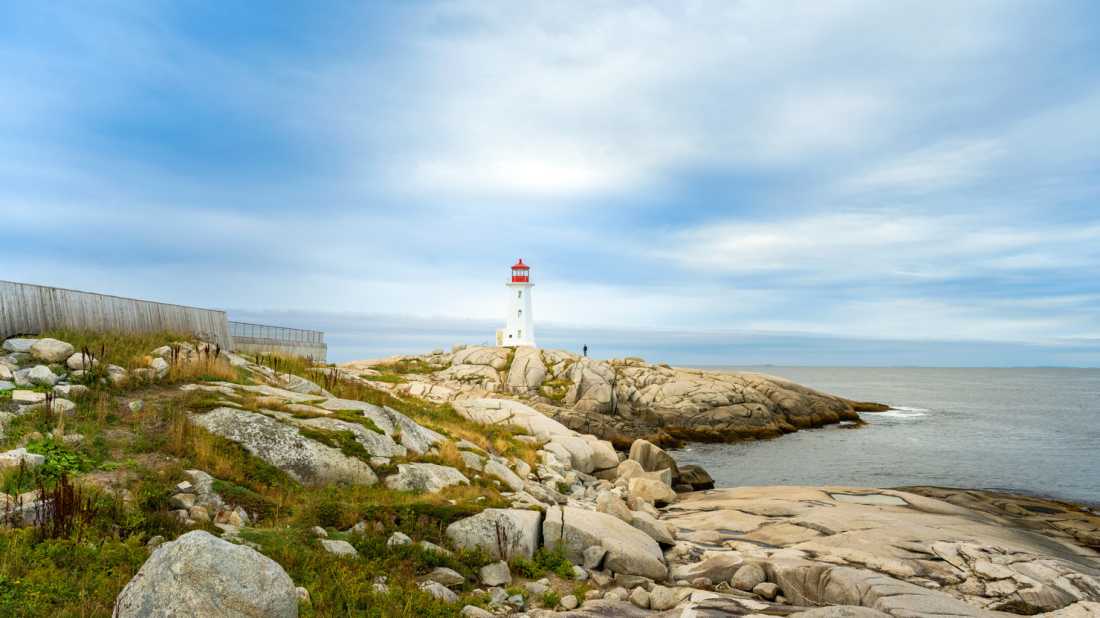
Peggy’s Cove Lighthouse (Nova Scotia)
The most popular and photographed lighthouse in Canada, this striking red-and-white lighthouse has been in operation for over a century. The octagonal concrete tower is 15 metres tall (49ft), perched on a massive granite outcrop. Visitors often scramble over the rocks for better views, even though rogue waves of the icy Atlantic have claimed a few lives (no selfie is worth it). Stick to the paths and viewing points, especially on a stormy, windy day. A new accessible viewing platform opened in 2021, complete with steel guardrails designed to look like fishing nets. The lighthouse was automated in 1958, and it remains an active navigational aid while still being one of Nova Scotia’s top attractions. Peggy’s Cove is a highlight on GCT’s Rum Runners Trail by Bike itinerary.
Cape Spear Lighthouse (Newfoundland & Labrador)
Each morning, Cape Spear greets the continent's first sunrise. Built in 1836 at the most easterly point of North America, it also has the oldest surviving lighthouse in Newfoundland and Labrador, now a national historic site. Witnessing the sunrise from Cape Spear (and if you’re lucky, whales and icebergs migrating offshore) is a true bucket list Canadian experience. Cape Spear's history isn't just about guiding ships to port. During World War II, it became the Fort Cape Spear coastal defence battery, complete with underground passages, barracks, and two massive 10-inch guns to protect St. John's harbour from German U-boats. The gun barrels still stand today. There’s a museum that covers this period, a boardwalk, and a popular trail that follows the cliffside. Parks Canada operates the site from early June to mid-October, but the grounds are open year-round. Part of the Great Trail, Cape Spear is a highlight for hikers on our East Coast Trail itineraries.
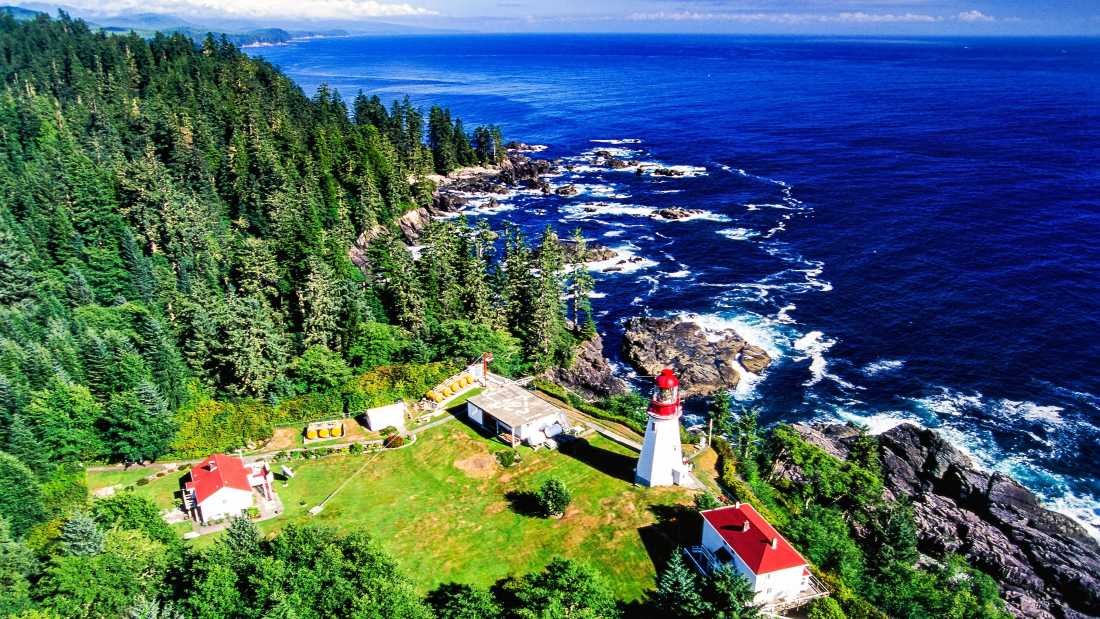
Pachena Point Lighthouse (British Columbia)
Several lighthouses greet hikers along the West Coast Trail of Vancouver Island, the most popular being Pachena Point. In operation since 1908, the lighthouse helped steer ships away from the “Graveyard of the Pacific,” where fog and ferocious seas sank more than 200 ships. The lighthouse sits atop a cliff about 200 feet (61 meters) above the cold Pacific Ocean, housed in an octagonal 20 metre (66 feet) wooden tower. Though the lighthouse itself is closed to the public, the grounds are a popular stop about 10 kilometres (6.2 miles) from the northern trailhead at Pachena Bay. Other heritage lighthouses on the West Coast Trail include Carmanah Point near Km 44 and the Cape Beale Lighthouse. Hikers on our West Coast Trail itinerary conclude their adventure in Pachena Bay, where they can rest their feet with a suitably epic backdrop of the lighthouse.
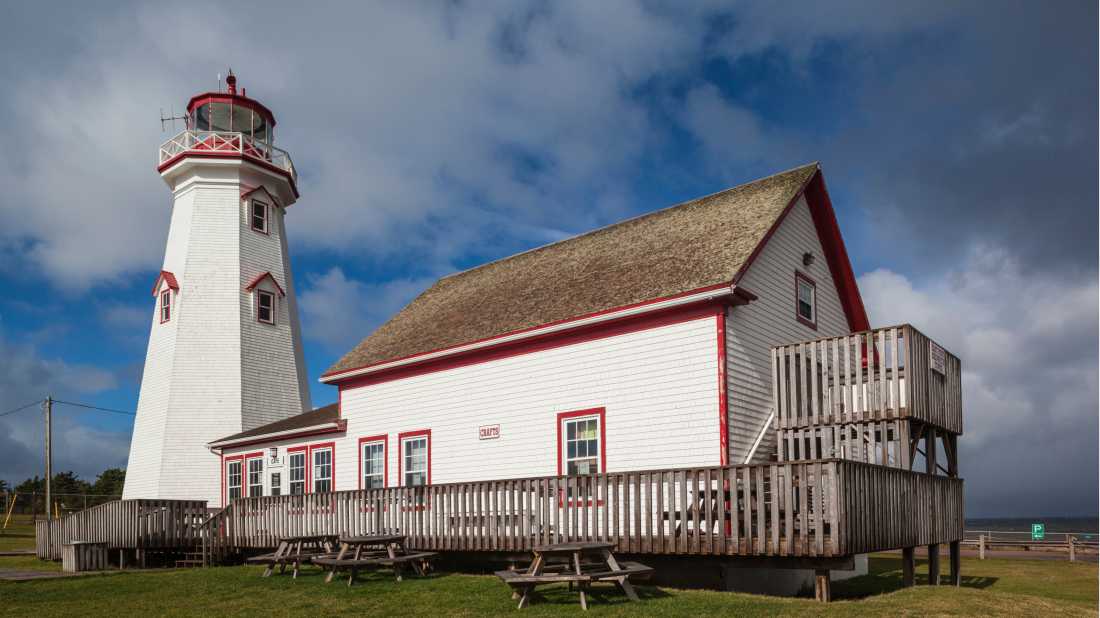
East Point Lighthouse (Prince Edward Island)
Located on the P.E.I.’s most easterly point, where the Gulf of St. Lawrence meets the Northumberland Strait and Atlantic Ocean, East Point’s lighthouse was built in 1867, the year of Canadian Confederation. Visitors can climb 67 stairs up the 19.5-meter (64-foot) octagonal wooden tower for panoramic views of the turbulent confluence of the three major bodies of water. The heritage lighthouse had to be physically moved twice after initial construction. The first relocation occurred in 1885 after the 1882 wreck of a British warship on a nearby reef. Local builders successfully moved the immense structure 488 meters (1,600 feet) closer to the point using greased timbers and horses. It was then moved again in 1908 due to erosion and to accommodate the expansion of the fog alarm building. Today the expansion houses a craft shop and gift store. The light was automated in 1989. A popular landmark, cyclists on our PEI Tip-to-Tip and Beyond itinerary conclude their adventure near the iconic lighthouse.
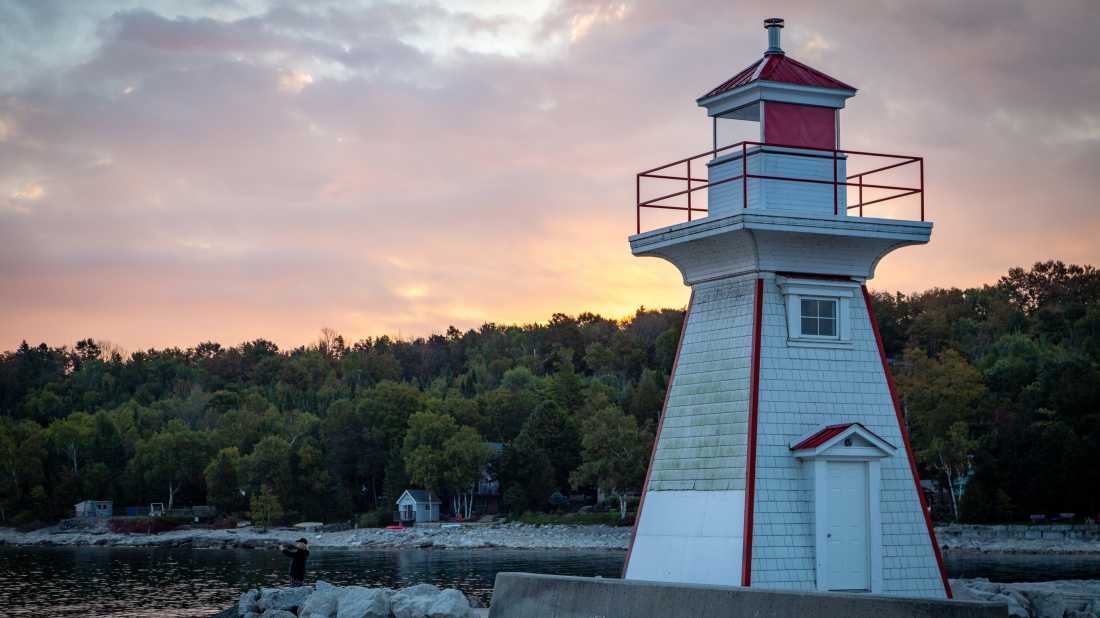
Lion’s Head Lighthouse (Bruce Peninsula, Ontario)
Here’s a lighthouse with a deep historical and emotional connection to the people of Lion's Head. The first light was established in 1903, with a more substantial wooden tower built in 1913. Shortly after, a legendary storm knocked the lighthouse off its wooden perch and blew it across the harbour. It was restored and reinstalled, before the Canadian Coast Guard dismantled it in 1969. In the 1980s, local high school students built a scale replica of the lighthouse as a student project, which was eventually pressed into service in 2000 after another powerful storm hit the region. The community-built replica stood tall until it was demolished by extreme waves smashing Georgian Bay during a massive storm surge in January 2020. But you can’t keep a good lighthouse down. Locals rebuilt the lighthouse with the original 1913 plans, erecting the landmark in a more sheltered location. You’ll encounter it on both our Bruce Peninsula Explorer and Bruce Peninsula Traverse itineraries.
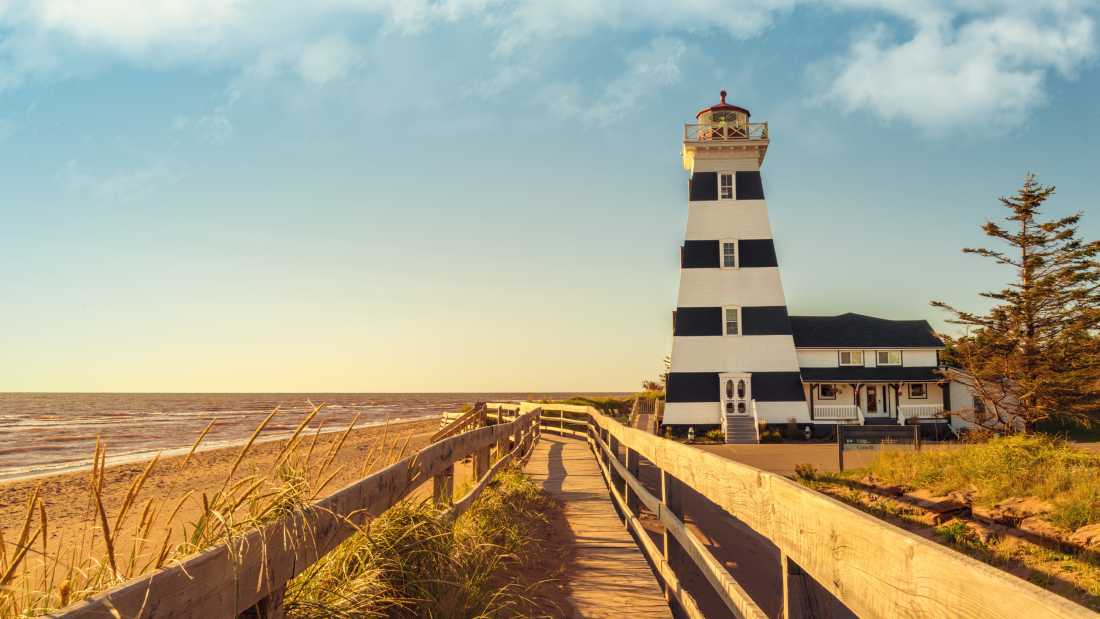
Point Prim and West Point Lighthouse (Prince Edward Island)
The Gentle Island’s oldest lighthouse is one of the few round-brick lighthouses left in Canada and remains a popular landmark. Overlooking the red sandstone shores that extend into the Northumberland Strait, it was built in 1845 to guide ships safely past a hazardous reef into the bay and onwards to Charlottetown Harbour. Visitors can enter the lighthouse and climb the 18.3 metres (60 foot) structure for sweeping views of the Northumberland Strait. Both a Federal and Provincial Heritage Site, the base features a museum with exhibits and displays about the lighthouse keepers who operated it for generations. If you’re cycling along the Confederation Trail, you can also keep an eye out for the West Point Lighthouse, which features a museum, viewpoint from the top, and an adjacent inn.
Most heritage lighthouse sites are free to visit or charge a modest admission fee. Some offer seasonal tours with guides who share stories of heroic rescues, tragic accidents, and what life was like for keepers, especially when storms battered the coast. They tend to be located on outcrops or rugged beaches, so be aware of your surroundings and take care climbing the steep staircases to the lamphouses.
Robin Esrock is the bestselling author of The Great Canadian Bucket List.