Blog home / Rail-Beds to Ridgelines: Adventures in Canadian Terrain
By Robin Esrock
There's a notable difference between cycling or hiking on a flat hardpacked path and cycling or hiking on a bumpy, rumpy, Humpty-dumpty wilderness trail. You feel it in your boots, on your saddle, and in your muscles too. Negotiating different terrain is one of the highlights of any outdoor adventure, and in Canada, there are so many different terrains to conquer.
Take freshly paved asphalt. It can make you feel like you're flying on a bike, and almost lull you into a meditative slumber. Gravel, on the other hand, is an entirely different experience, demanding constant attention and adjustments. Terrain impacts the feeling of distance. Hiking or cycling up or down steep hills is not coasting on a flat, even if the distance is the same. That’s part of what makes an outdoor adventure interesting, ensuring each day is different from the last. Across Canada's many self-guided trails, expect terrain to change from one province to the next, and from one morning to the next too. Let's explore what you might encounter out there, and how best to take it on.
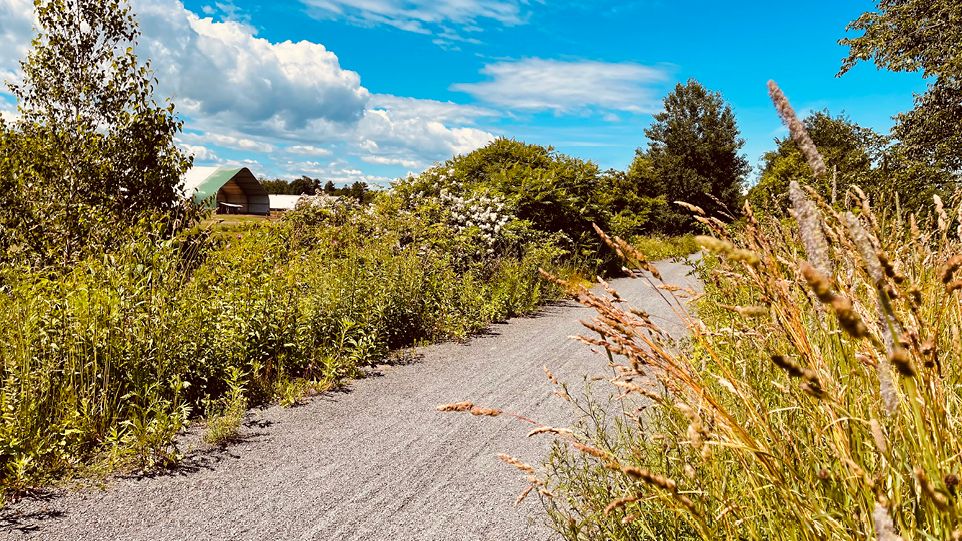
Cycling a Rail Bed
Prince Edward Island’s Confederation Trail, Quebec's Le P'tit Train du Nord, B.C.'s Kettle Valley Heritage Trail, Nova Scotia's Harvest Moon Trail and other trails were all built for locomotives. This means the grades tend to be gentle, because trains went around hills as opposed to over them. When the tracks were pulled out, hardpack crushed stone and dirt were put in their place, resulting in easy rides on hybrid bikes with wider treads, and few challenges for your leg muscles. Riding through tree tunnels, the rhythm is smooth and steady, though you'll need to stay alert for road gates, occasional wildlife, or walkers and riders on what are often mixed-use trails. Occasionally, rail beds have sections that are more challenging, with loose gravel or potholes, and your hands and shoulders are required to do more work. The trick is counterintuitive: relax. Grip your bars lightly, let the bike move beneath a stable upper body, and look ten metres ahead rather than down at your front wheel. Fight the gravel and it tends to fight back. If you simply keep your momentum, your bike will keep on rolling.
Hiking Verticals
While cycling different terrain challenges your legs, hiking puts your leg muscles, lungs and sometimes your nerves to the test. Nowhere is that clearer than in the Rockies, where switchback trails gain elevation in a way no rail bed ever will. As the air thins and the trees shrink, there are ample rewards to keep you motivated. Alpine lakes, exposed ridgelines and bucket list views of endless horizons are well worth whatever it takes to get there. On steep climbs, set a slow pace to keep your heart rate from spiking. Think tortoise and hare: bound up too fast and you'll quickly exhaust yourself, but slow and steady wins the summit race. Take shorter steps, which are kinder to your quads, and will help you navigate any slippery sections. As you ascend and the trail begins to open up, set easy targets ahead and give yourself frequent, strategic breaks. Alpine terrain insists that you pace yourself against altitude and conditions rather than distance. Hiking poles definitely help, taking pressure off your knees on the way back down, and adding support when you scramble over trees or rocks.
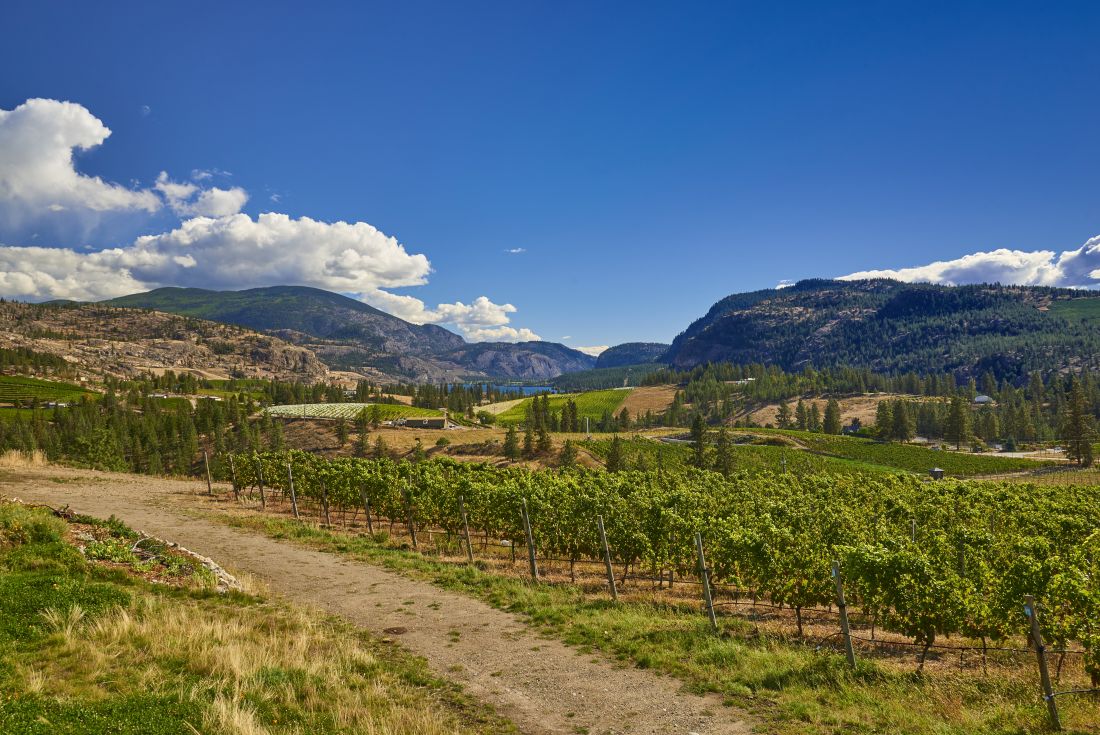
Asphalt, Vineyards, and Multi-Use Trails
When riding paved multi-use paths, bikes tend to disappear underneath you and the rhythm becomes almost involuntary. Smooth tar minimizes the effort of distance and naturally increases your speed. Since you're in the company of walkers, kids, dogs and other riders, you might need to ring your bell, or use the universal "on your left" call-out. Forest trails, for riders and hikers alike, tend to be narrow and shaded, with soft duff underneath. Hikers should keep their eyes on the ground a few feet ahead, soaking it all in while staying aware of tangled roots or obstacles. Vineyard riding routes, whether through the Okanagan, Niagara Escarpment or Annapolis Valley, tend to consist of rolling hills through wineries and farmland. If hills are intimidating, consider upgrading to an e-bike, which effortlessly flattens the world. Wine country is beautiful country, inviting you to stop and smell the flowers (or visit a tasting room to add a bottle to your saddle bag).
Hiking Coastline, Forest and Tundra
The East Coast Trail is a spectacular coastal route, but coastal doesn't mean flat. Spectacular ocean views, cliff faces and rock arches are only part of the story. The hiking can get slightly technical, and occasionally challenging. There might be roots knotted across the path, mud that doesn't dry out even in summer, boardwalks laid over wet bog, slippery sections or thin trails through thick forest. It's the kind of terrain that requires a slower, more deliberate stride, keeping your eyes down as often as they're up. On a coastal trail, you often hear the surf, smell the sea salt, and occasionally find yourself walking along a cliff with whales breaching in the distance. With horizons that stretch forever, you never know what you might see out there.
Inland forest trails offer soft needle-covered paths, disco-ball sunshine filtering through the trees, and the quiet, uplifting hush of nature. Stop every once in a while to simply enjoy it and breathe that earthiness in. Forest bathing is a real thing! Moss, ferns, hardwoods, exposed roots, and fungi are common fixtures on the trails of Canada, as are birds and the occasional mammal too.
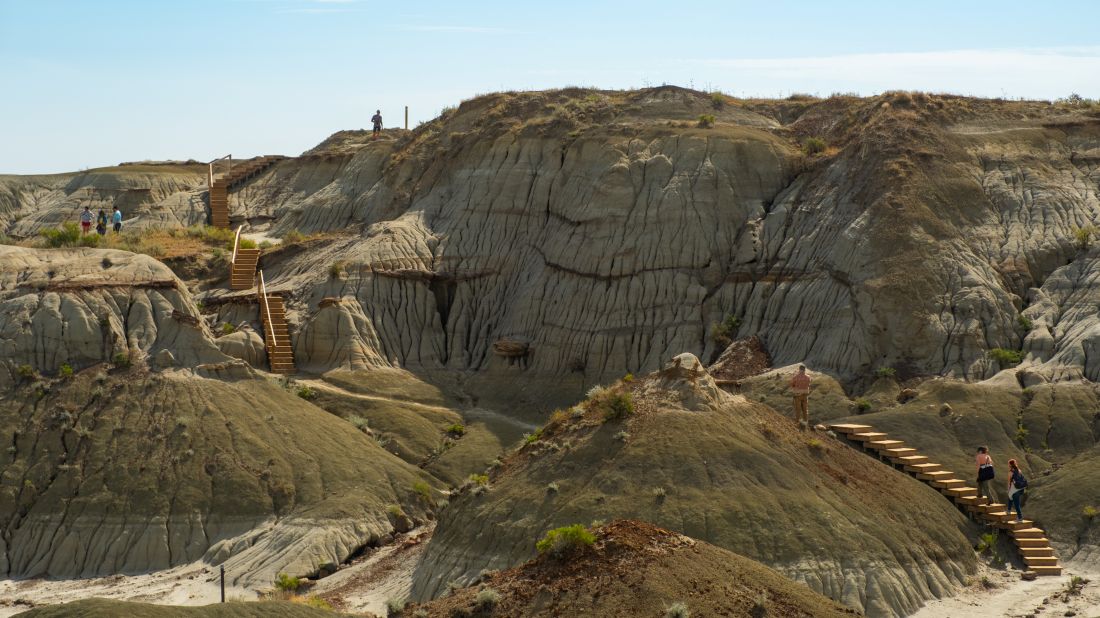
In contrast, Alberta's Badlands consist of arid, treeless, sun-exposed terrain carved into hoodoos and coulees that look more like Mars than Canada. And when you hike in the Yukon's Tombstone Territorial Park, you’ll leave the treeline behind, for a landscape of dramatic mountains, colourful tundra and shimmering lakes.
Gravel and Rain
When you hear about gravel, know that it can mean almost anything. It might be a beautifully maintained crushed-stone trail that feels nearly as smooth as pavement, or a rougher section with rock chunks, or soft sandy ridges. Rain can also turn a firm surface into mud or leave unexpected puddles deeper than your hiking boot. Weather forecasts assist with deciding what to wear. Regardless of the terrain, it’s a good idea to pack layers, and be prepared for whatever nature throws at you. GCT itineraries include packing lists to help you on your way.
Seasons
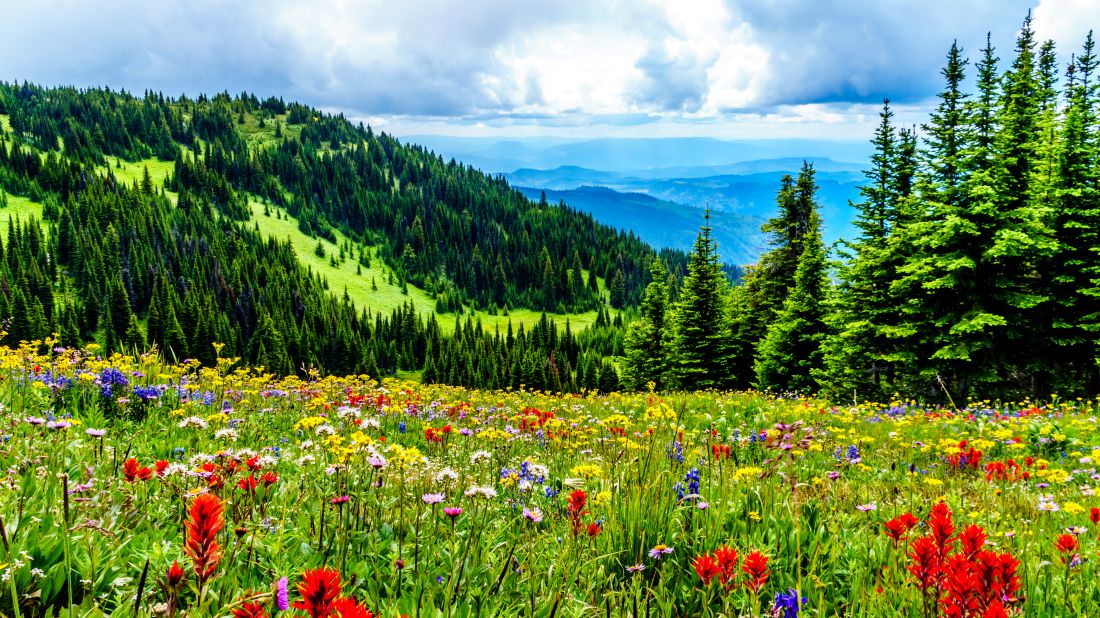
None of Canada’s terrain stays the same throughout the year. Spring turns rail-beds soft and occasionally muddy before they firm up in early summer. Meltwater creates that first electric burst of new-growth green brush. Snow-covered alpine meadows erupt into wildflowers by late July, full of lupines, Indian paintbrush, and glacier lilies, pushing through ground that was frozen back in June. Summer brings longer days, warmer temperatures and trails at their most accessible, although heat can make exposed terrain considerably more demanding. Things turn sharply cooler by September, with the light lower and longer across the landscape. Fall drops a colourful layer of leaves over forest singletrack that can hide roots you'd otherwise see coming, and coastal trails get wetter and wilder as the shoulder season sets in, testing footing in new ways even on ground you've hiked before. A mountain trail in sunshine can feel exhilarating, while the same trail in fog becomes atmospheric.
This shifting terrain ensures a different experience no matter how many times you take on the same route. The fact is, a trail you rode in June won't be the same trail when you return in September. It’s all part of the experience, and the reason we keep coming back to the beauty of the outdoors, season after season, year after year.
Robin Esrock is the bestselling author of The Great Canadian Bucket List.